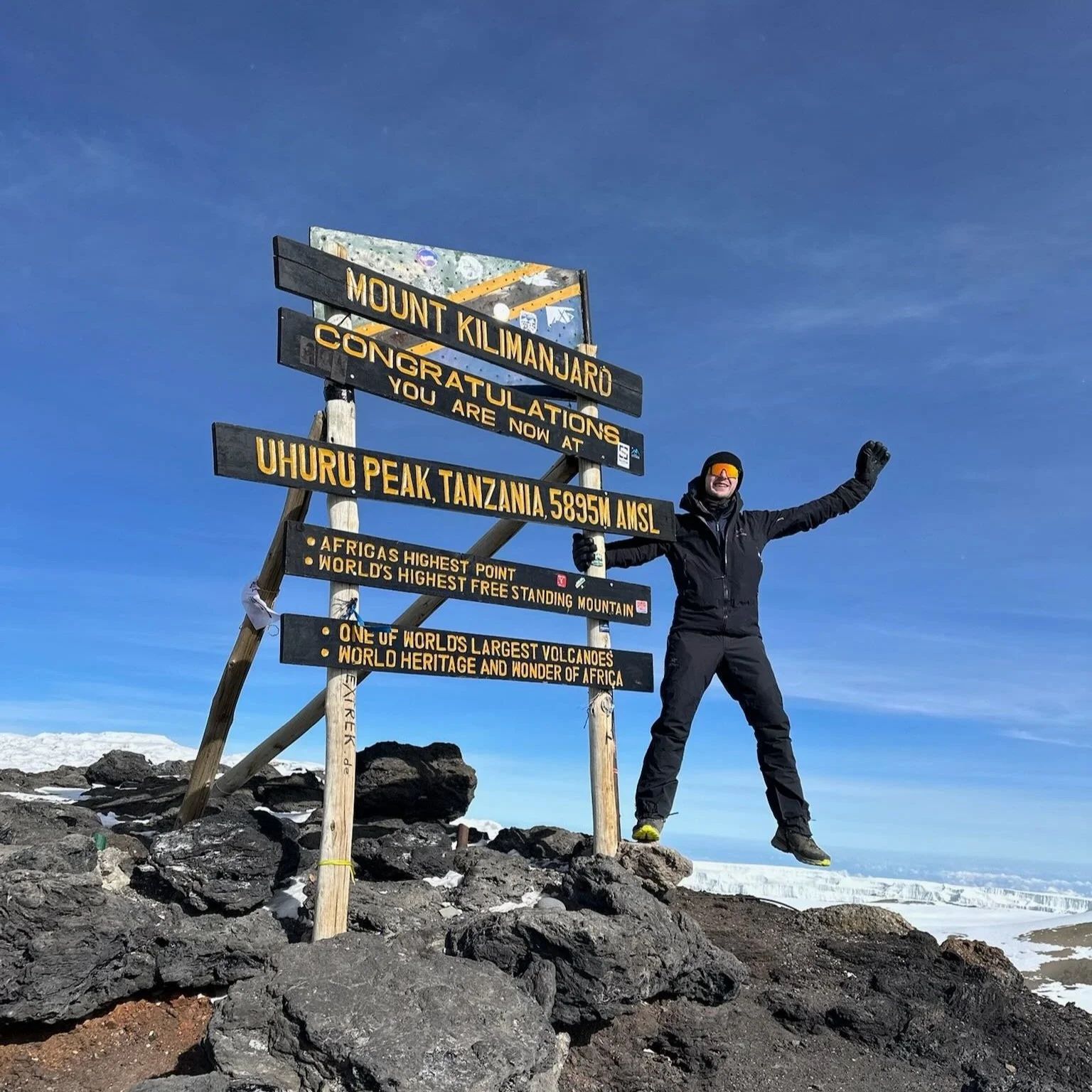
📷 The Uhuru Peak summit sign at 5,895m — the highest point on the African continent.
Kilimanjaro is the highest free-standing mountain in the world. At 5,895 metres above sea level, it rises from the savannah plains of Tanzania like a declaration — a reminder that Africa contains extremes of geography as dramatic as anywhere on earth. And unlike the other seven summits, Kilimanjaro is technically achievable by anyone who is fit, well-prepared, and willing to push through discomfort.
This guide is everything we wish we had known before our team made the climb.
Choosing Your Route
There are seven established routes up Kilimanjaro. For most climbers, the choice comes down to three:
- Machame Route (6-7 days): The most popular route and, many argue, the most beautiful. Known as the "Whiskey Route," it offers excellent acclimatisation and stunning scenery through multiple climate zones.
- Lemosho Route (7-8 days): The most scenic route, approaching from the west through pristine wilderness. Higher success rate due to superior acclimatisation profile. Recommended for first-timers who want the best chance of summiting.
- Marangu Route (5-6 days): The oldest and only route with hut accommodation (rather than tents). Called the "Coca-Cola Route." Shorter acclimatisation profile = lower success rate. Not recommended.
Altitude Sickness: The Real Challenge
The summit of Kilimanjaro is not technically difficult. There are no ropes, no ice axes, no vertical cliff faces. The challenge is almost entirely physiological — specifically, altitude sickness. At 5,895 metres, you are breathing air that contains roughly 50% of the oxygen available at sea level. The body needs time to adapt.
Symptoms of Acute Mountain Sickness (AMS) include headache, nausea, fatigue, and dizziness. These are normal at altitude and manageable. Serious altitude sickness — High Altitude Pulmonary Oedema (HAPE) or High Altitude Cerebral Oedema (HACE) — is rare but life-threatening, and requires immediate descent.
The golden rules: Climb slowly ("pole pole" in Swahili — the mantra of every Kilimanjaro guide). Stay hydrated (4-5 litres of water per day). Take Diamox (acetazolamide) if your doctor approves. Never ascend with worsening symptoms.
What to Pack
Kilimanjaro passes through five distinct climate zones — from tropical rainforest to arctic summit. You need gear for all of them.
- Layers: Moisture-wicking base layers, fleece mid-layers, a down jacket rated to at least -15°C for summit night
- Waterproofs: A quality waterproof jacket and trousers (the mountain creates its own weather)
- Boots: Waterproof, ankle-supporting trekking boots, broken in before arrival
- Poles: Trekking poles are not optional — they significantly reduce knee strain on descent and help with balance at altitude
- Gaiters: Essential for the summit push through scree and loose rock
- Headtorch: Summit push begins at midnight — a reliable headtorch with spare batteries is essential
Cost and Operators
A guided Kilimanjaro climb costs between $2,000 and $4,500 USD depending on route, duration, and operator. This covers park fees ($70-80/day), guide and porter fees, meals, and accommodation. Never book the cheapest option — underpaid guides and porters, poor quality gear, and shortcuts on acclimatisation days are how people get hurt on this mountain.
"The summit of Kilimanjaro is not where Africa ends. Standing on the roof of the continent, looking out over the curvature of the earth as dawn breaks, you understand that it is where Africa truly begins."